
AI: An Untrodden Path

Why designing for uncertainty is the defining principle of AI infrastructure
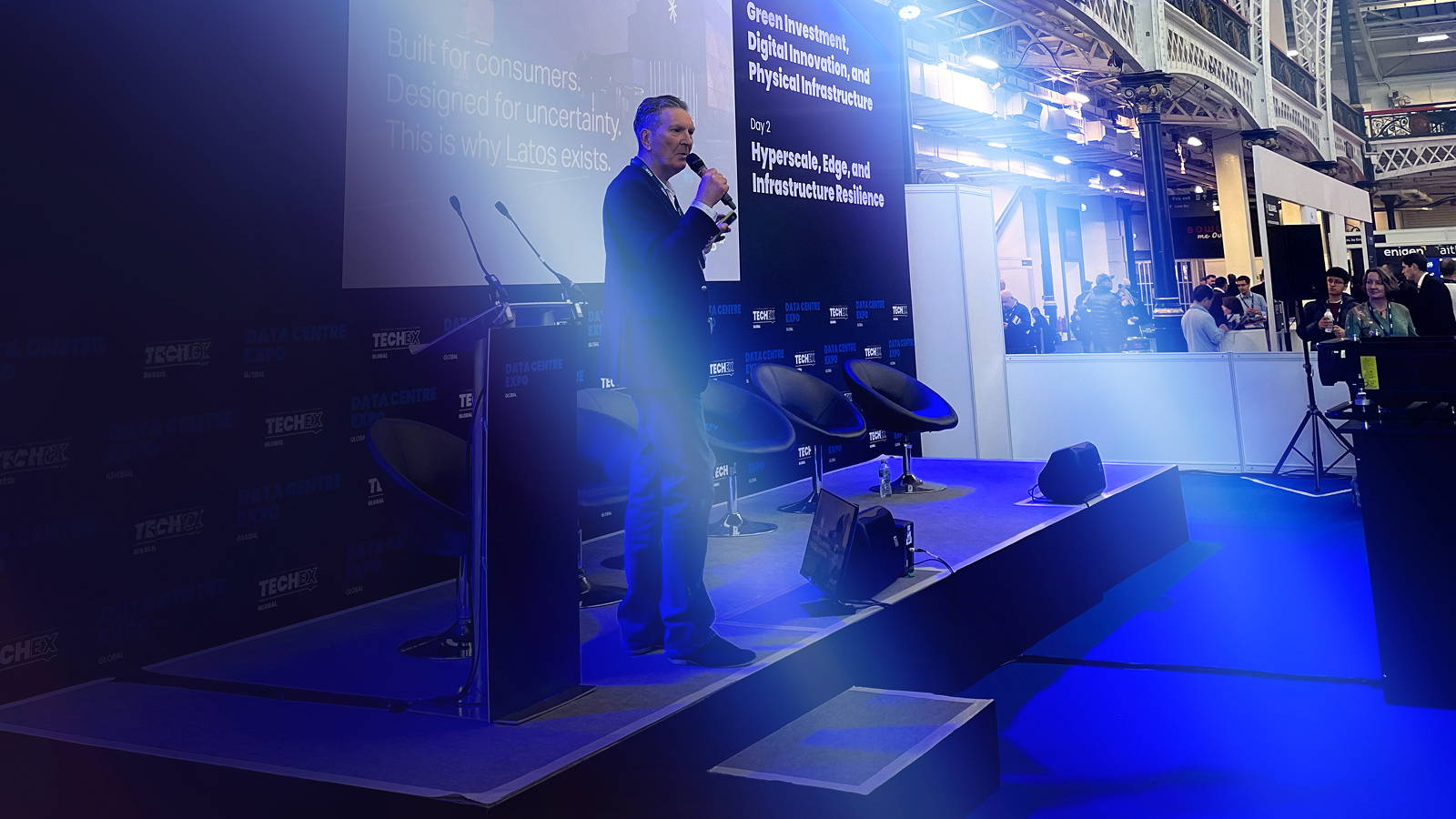
Recently at the Data Centre Expo, part of TechEx Global at Olympia London, Latos VP Peter Wilcock delivered a simple but uncomfortable truth:
No one knows exactly how AI will unfold.
Despite the roadmaps, forecasts, and confident predictions, the reality is that AI remains in its earliest phase. Its long-term form, scale, and societal role are still being shaped. Yet across the industry, infrastructure is being built as though the destination is already known.
This assumption carries risk.
Because when the future is uncertain, infrastructure designed around fixed expectations can quickly become misaligned with reality.
The question is not whether AI will grow, but how to build systems capable of supporting whatever it becomes.
Certainty is not a strategy
Every foundational technology has followed a similar path.
Broadband was not built because its final use cases were clear. Cloud computing did not scale because its trajectory was predictable. Mobile networks were not deployed because providers knew exactly how smartphones would reshape behaviour.
They hit hurdles that we can avoid today but ultimately succeeded because the infrastructure was designed to adapt.
AI now sits at the same inflection point.
Today, much of its deployment remains enterprise-led, powering internal tools, automation, and specialised workflows. These environments are critical for learning and progress. But enterprise adoption alone is not the path to sustaining infrastructure at global scale.
Mass adoption has always come from consumers.
From streaming and search to mobile apps and cloud services, it was everyday use, not enterprise deployment that defined scale, economics, and permanence.
AI will follow the same path.
Experience defines adoption
As AI moves closer to everyday life, performance ceases to be a technical metric and becomes a human one.
For consumers, latency is not measured in milliseconds. It is emotional – felt in responsiveness, reliability and trust.
When AI responds instantly, it feels seamless. When it does not, it feels broken.
This shift changes what infrastructure must deliver.
Centralised systems designed to serve distant users introduce physical limits. Distance creates delay. Delay undermines experience. And experience determines whether AI becomes essential or optional.
If AI is to become part of everyday life, it cannot feel remote. It must feel immediate.
The generational shift is already underway
For the next generation, AI is not a novelty. It is an expectation.
Children growing up today do not view AI as a breakthrough. They view it as part of the environment. When it works, it is invisible. When it does not, it is simply a failure of the system around them.
This expectation fundamentally raises the bar. Infrastructure must not only support AI capability. It must support AI as a dependable, ambient utility, something always available, always responsive, and always trusted.
This cannot be achieved through scale alone. It requires the right design principles.
Designing for uncertainty
If the future shape of AI cannot be predicted, infrastructure must be designed differently.
Not for a fixed outcome, but for adaptability. Not for today’s demand alone, but for tomorrow’s unknown requirements.
This principle sits at the core of Latos’ approach.
Neural Edge infrastructure brings compute closer to the point of demand – reducing latency, improving resilience, and enabling AI systems to operate where they are needed most.
By positioning infrastructure at the edge, it becomes possible to support both current enterprise workloads and future consumer applications, whatever form they may take.
This is not about predicting a single future. It is about ensuring readiness for all of them.
Because infrastructure will not simply support AI, it will define its potential.
Walking the untrodden path
There is no map for where AI ultimately leads. But there are principles that guide how to build for it. Adaptability. Proximity. Trust.
Designing for uncertainty is not an admission of limitation. It is a recognition of reality.
Because the systems that succeed will not be those built on assumptions of certainty, but those built to evolve alongside the technology and the people they serve.
This is the path Latos is building.


